Inconvenience
On social commitments.

It has been bitterly cold in London this week. The type of cold that gets into your bones and makes you not want to do anything at all. My idea of comfort in these trying times is to crank the heating up to the max, put the fairy lights on, brew myself a herbal tea, snuggle in a blanket, and get stuck into my ever-growing to-read pile.
Yet in reality, I rarely manage any of that. As per usual, I’ve oversubscribed my calendar with dinners, cinema dates, openings, work events, birthdays, volunteering projects — things that past me genuinely thought future me could manage with an endless amount of energy. But now, with the sun setting at 4 pm and the temperature dropping, I’m operating with the social battery of a spoon.
Lately I’ve been thinking a lot about what the “right” decision is in those moments when fun plans suddenly feel like a major chore. Is it better to cancel well in advance, cancel at the last minute, or not cancel at all? Should you push through the struggle of getting dressed and stepping out of the house, or should you give in to the cosiness of curling up on your sofa? Should you ever miss a birthday? Is avoiding inconveniences necessary for our well-being, or does it just shrink our own lives?
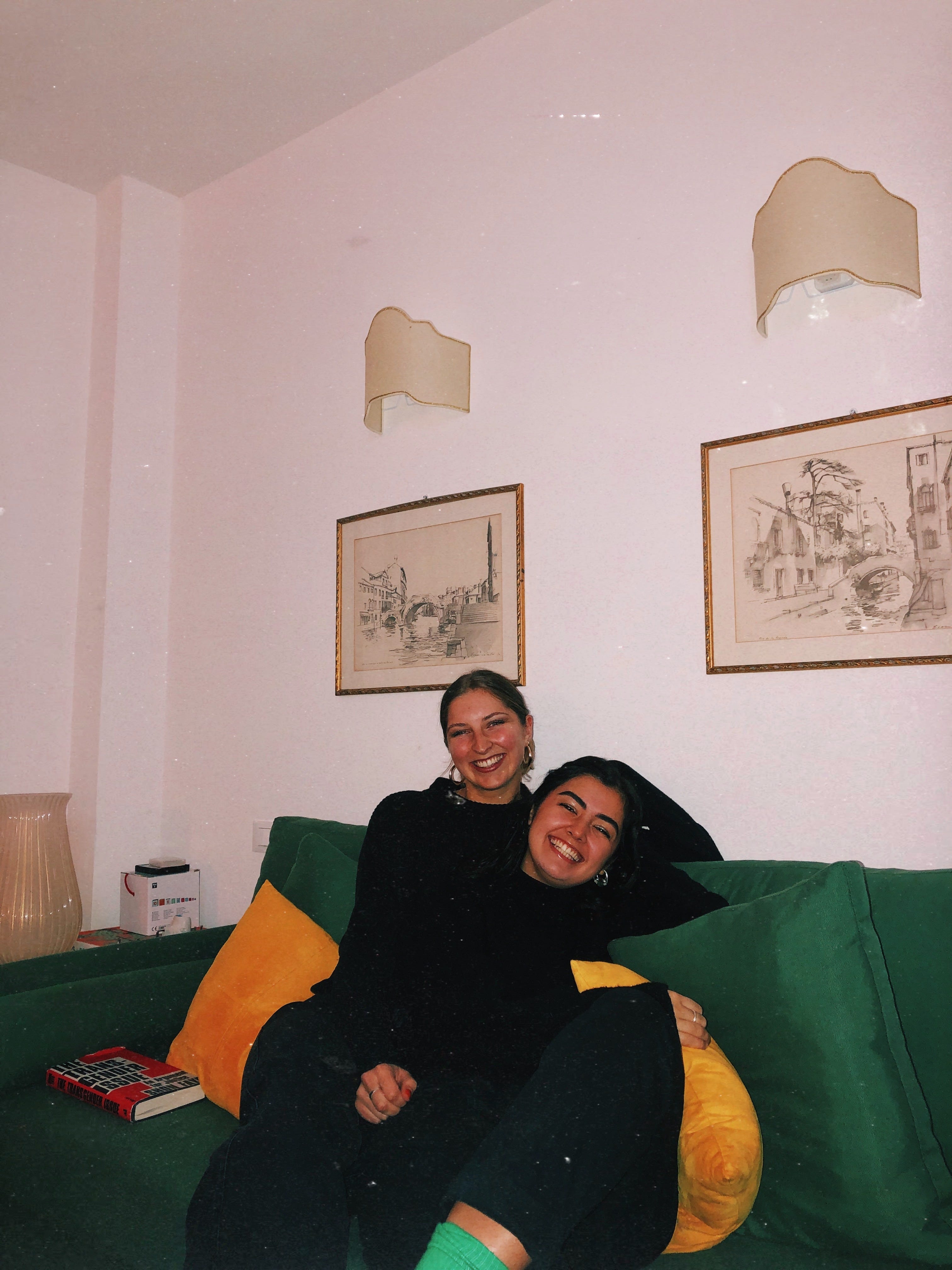
A viral tweet did the rounds earlier this year, which read: “‘inconvenience is the cost of community’ I repeat to myself as I climb six flights of stairs for my friend’s birthday party for her cat.” And though it’s a bit silly, I do tend to agree with it. While it’s perfectly fine to decline a friend’s birthday party for a cat (coincidentally, I have one coming up next Saturday) or the type of work event there will be millions more of, I think it’s pretty sad to miss a good friend’s birthday just because you feel a bit tired on the night or have found more exciting plans instead. (Disclaimer: I want to clearly distinguish “a bit tired” from being completely run down by work, caring responsibilities, or health issues, because obviously, these are quite different things!)
One of the reasons I’m not a huge fan of throwing big birthday parties myself is the inevitable two-hour lull at the beginning of the night when most people haven’t arrived yet, and you get a flurry of texts from guests saying they can no longer make it. The reasons are always perfectly valid, but when it’s 15–20 people in a row, you can’t help but wonder whether some people just couldn’t be bothered. I mean, is it really too much to expect people to show up for the events they themselves said they were excited to attend?
I was talking to my cousin about all of this in relation to my recent thirtieth, telling her how much I appreciated the people who came and what a great night it turned out to be, but also how surprised I was by the number of last-minute dropouts. She then admitted that she herself had been wavering about her attendance because my party fell on Halloween (her favourite night of the year), and that it was her flatmate who talked her into dropping by my thirtieth birthday — a fairly significant milestone — first. It was only then that she realised how it might have upset me if she had missed my event to go to another party instead. I adore my cousin, and the fact that she shared this with me shows how close we are, which is why, I suppose, I was stunned that she momentarily considered missing it altogether!
In a piece I was recently reading on the same topic, the writer asks: “After all, for the past few years, we’ve been told to say ‘no’ more often, set boundaries, cut off people who ‘trauma-dump’ on us, and religiously practice self-care. Now we’re being told to go the extra mile for one another, or risk dying alone – so which one is it?” It’s so obviously the extra mile!!! We should want to do things for the people we love and care for, even if those things disrupt our comfort. Right?! Don’t we have some commitments to one another?
In moments like this, I think about how laughable the idea of a political revolution, for example, seems when many of us (me included) don’t seem to want to inconvenience ourselves to spend a few hours celebrating our loved ones, going out of our way to help a friend move house, or pick up a family member from the airport. And it can even be fun. I recently spent a Saturday morning driving my colleague to the tip with all the rubbish from recent work on her new flat. We had the best time! It was a bonding experience that ended with a cup of tea and a natter at her place.
When I was younger, I used to get really frustrated when my family (who live abroad) would order packages to my address and ask me to bring them over when they next visited. I was annoyed for years, until my brain developed and I realised they wouldn’t ask if they didn’t genuinely need the help. Now I want to be of assistance, even when their random TKMaxx deliveries throw off my plans, because it’s my way of showing how much I love them.
As I get older, I’m realising that showing up for people is mostly about the choices we make and the priorities we set. Sure, maybe not everyone wants a village, but I do — which is why I’m going to try my best to be a “villager.” In practice, that means being clearer about plans, rearranging when I can’t make something, or finding another way to show I care. But honestly, the best thing of all is often just mustering the energy to show up in the first place, even when it’s cold and dark and very inconvenient. More often than not, I’m glad I went — and the people I care about will remember it too.
P.S. I’d like to apologise to anyone I may have freaked out with a typo in my previous post that claimed I was entering my twenties in the concluding paragraph. My proofreader, who also happens to be my boyfriend, didn’t spot this error, and I’ll take it as a compliment. But seriously, at least you can be assured that this newsletter is ChatGPT-free!
What I’ve been reading:
Mishal Husain’s Broken Threads is a family memoir that traces the 1947 Partition of India and Pakistan through diaries, letters, and audio recordings. It’s honestly outstanding.
We Grow The World Together: Parenting Toward Abolition edited by Maya Schenwar and Kim Wilson. I’m reading this for a review, so more thoughts to come.
Great piece as always diyora! I really struggle with mental and physical health flares in winter so have recently bought Mark Weiking’s book on hygge. What I learned is that I’m pretty similar to the Danish - I value meaningful connections with a handful of people who I care about. Seeing those people regularly does wonders for my mental health. I feel like there’s a lot of pressure both in work and socially to be a “social butterfly” and keep up with an endless list of commitments and events. It’s totally okay to say no to them. It’s for those people who I really care about - the ones that provide meaningful connections - that I’ll go the extra mile for and won’t cancel on last minute (unless I’m really ill). I also think COVID has really affected everyone’s social skills too